SHARE
RECENT

The Manosphere: Who’s Shaping Young Men’s Views on Masculinity?
While reading an article about the manosphere, I came across Pierce’s story. In 2019, he was 24, between jobs and struggling with depression. He wanted to feel more confident and find a sense of belonging.…

Personal Trauma Still-in Disorder A.K.A. PTSD: Post Traumatic Stress Disorder
Trauma arrives without invitation. It can come through violence, abuse, loss, an accident, betrayal, war, a devastating relationship, or an experience that overwhelms our ability to cope. Whatever its source, trauma can leave us feeling…

When Did Having a Phone Become a Necessity?
“But my friend already has a phone.” For a lot of kids, that might be one of the first arguments they make when asking their parents for their own phone. And honestly, it can be…

Are You Choosing Your Feed, or Is It Choosing You?
Today, the people you spend the most time with aren't always sitting in your living room or standing on the court with you. Some of them live inside the glass screen in your pocket. And…

1 in 2 Men Are at Risk. Are you?
More than six out of every ten Canadian men aged 19–29 are at risk of social isolation, the highest of any age group surveyed in the Canadian Men’s Health Foundation's 2025 research. And social isolation…
ABUSIVE RELATIONSHIPS. CHILD ABUSE PREVENTION, DEALING WITH PEER PRESSURE. HOW TO SAY NO?, HEALTHY RELATIONSHIPS ADVICE. BEST DATING TIPS, MENTAL HEALTH
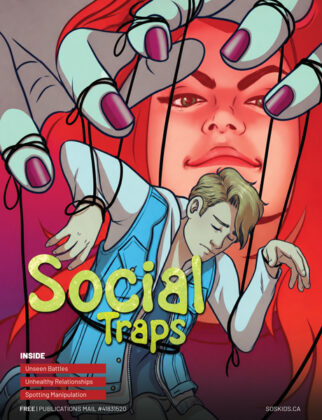
How to Spot Manipulation: Hidden Signs and Unhealthy Patterns

Have you ever wondered if you’re experiencing manipulation, but ignored the feeling that something wasn’t right? Maybe you’ve noticed someone making you feel guilty for saying no, dismissing your feelings or blaming you for every disagreement. Deep down, you recognize the signs, but because you care about the person or don’t want to make things worse, you convince yourself it’s not a big deal.
Sometimes, we recognize unhealthy patterns but struggle to know what to do about them. Even when we understand what’s happening, our reactions can make a difference. We might stay silent to keep the peace, react out of frustration or find ourselves using the same behaviours that hurt us.
Manipulation isn’t always easy to navigate, even when we know what it looks like. It can happen in friendships, family relationships, and romantic relationships, and it can come from others or show up in our own behavior. Learning to recognize the signs is important, but so is understanding how we respond to them. Because awareness is a starting point, but what we choose to do next matters, too.
Guilt-Tripping: A Form of Manipulation
You tell a friend you can’t hang out because you’re tired and need some time to yourself. Instead of understanding, they say, “Wow, okay. I guess you don’t care about spending time with me anymore.”
Now, instead of enjoying your evening off, you’re sitting there feeling guilty. You start wondering if you should cancel your plans, even though all you wanted was a little time to recharge.
Sound familiar?
Guilt-tripping happens when someone uses guilt to influence another person’s decisions. It can look like making someone feel selfish for setting boundaries, bringing up past favors to get their way or suggesting that saying no means they don’t care.
But here’s something worth thinking about: have you ever done the same thing to someone else? Maybe you’ve said, “If you really cared, you would,” because you felt hurt or wanted reassurance.
Feeling disappointed is normal. Making someone feel responsible for your happiness is different. Healthy relationships allow us to express our feelings without pressuring others to give us what we want.
Gaslighting and Manipulation: Understanding Self-Doubt
Gaslighting is one form of emotional manipulation that can leave us questioning our own memories, feelings and understanding of a situation.
Maybe you bring up a comment that hurt your feelings, only to hear, “You’re so dramatic,” or “That never happened. You’re making things up.”
When this happens repeatedly, it can become difficult to trust your own perspective. This may be a sign of gaslighting, a form of manipulation in which someone distorts or denies reality to make another person question their own memory, feelings or understanding of events.
Not every disagreement or difference in memory is gaslighting. What matters is the pattern, especially when someone repeatedly dismisses your experiences or tries to convince you that you can’t trust yourself.
It’s also worth asking whether we sometimes do this without realizing it. When someone points out that we’ve hurt them, our first reaction might be to get defensive. We might say they’re overreacting because admitting we caused pain feels uncomfortable.
We don’t have to agree with every interpretation of a situation, but we can still listen to how our actions affected someone else. Being willing to hear another perspective doesn’t mean we’re automatically wrong. It means we’re open to understanding.
Silent Treatment as Emotional Manipulation
Emotional manipulation doesn’t always happen through words. Sometimes, silence itself can become a way to influence how someone feels or behaves.
Maybe someone hurt your feelings, so instead of explaining why, you stop replying to their messages. You hope they’ll notice, ask what’s wrong and apologize. When they don’t, you become even more upset.
Taking space when emotions are running high can be healthy. The difference is whether that space is used to calm down or to punish someone and make them feel anxious until they give in.
The same goes for relationships where someone threatens to leave every time there’s an argument, tests their partner’s loyalty or deliberately makes someone jealous to get attention.
These behaviours can come from insecurity, fear of rejection or not knowing how to communicate difficult feelings. Understanding where they come from can help us change them, but it doesn’t make the impact any less real.
Instead of expecting someone to figure out what’s wrong, we can try saying it directly: “That hurt my feelings, and I need some time to process it.” It might feel uncomfortable at first, but honest communication gives both people a chance to understand each other.
Blame-Shifting and Manipulation in Relationships
Blame-shifting can be a sign of manipulation, especially when someone repeatedly avoids responsibility by making another person feel at fault.
It’s easy to defend ourselves when we feel hurt or misunderstood. Maybe we said something unkind but justified it because the other person started the argument. Maybe we apologized with a “I’m sorry, but you made me angry.”
This is where blame-shifting can become a problem. Instead of taking responsibility for our actions, we redirect the conversation toward someone else’s mistakes.
Of course, conflict isn’t always one-sided. The other person may genuinely have hurt us, and we shouldn’t have to accept blame for things we didn’t do. But someone else’s behaviour doesn’t automatically excuse our own.
Two things can be true at once: we can have a valid reason to feel hurt, and we can still be responsible for how we respond.
A genuine apology doesn’t have to mean taking all the blame. It means acknowledging what we did, understanding its impact and making an effort to do better.
Recognizing Patterns of Manipulation
Recognizing emotional manipulation means looking beyond a single disagreement and paying attention to repeated behaviours, their impact and whether someone is willing to change.
If you find yourself constantly feeling guilty, second-guessing your feelings, walking on eggshells or changing your decisions to avoid someone’s reaction, it may be worth taking a closer look at the relationship.
You can start by paying attention to how you feel after interactions with that person. Do you feel heard and respected, even when you disagree? Or do you regularly leave conversations feeling confused, ashamed or responsible for their emotions?
And if you recognize some of these behaviours in yourself, try not to stop at feeling guilty. Ask yourself what you were hoping to achieve, why you responded that way and what you could do differently next time.
If a relationship feels unsafe or controlling, consider reaching out to someone you trust or a professional for support. Setting boundaries can help, but you aren’t responsible for changing someone else’s behaviour.
Setting Boundaries and Communicating Better
Recognizing manipulation is only the first step. Learning how to respond, set boundaries and communicate honestly can help us navigate difficult situations more thoughtfully.
The truth is, we might not always recognize these patterns right away. We might excuse someone else’s behaviour because we care about them, or justify our own because we feel hurt. Recognizing manipulation takes honesty, patience and a willingness to look beyond our intentions and consider the impact of our actions.
We all want to feel understood, valued and cared for. But those needs shouldn’t come at the expense of someone else’s boundaries or peace of mind.
So the next time a conversation leaves you feeling guilty, confused or unheard, take a moment to think about what’s happening. Are your feelings being respected? Are you respecting the other person’s feelings, too?
Sometimes, recognizing an unhealthy pattern starts with asking a simple question: Am I communicating what I need, or am I trying to make someone else respond the way I want them to?
That question can be uncomfortable, but it can also be the beginning of healthier relationships, better communication and a better understanding of ourselves.
Need Someone to Talk To?
If something in this article feels familiar, you don’t have to figure everything out on your own. Whether you’re unsure about a relationship, worried about your own behaviour or simply need someone to talk to, support is available.
- Kids Help Phone
Free, confidential support for young people across Canada. Call 1-800-668-6868, text 686868 or connect online. - Alberta’s Family Violence Info Line
Call or text 310-1818 for information, support and referrals, available 24/7. - Government of Canada’s Family Violence Resources
Find support services, helplines and resources across Canada.
The truth is, we might not always recognize these patterns right away. We might excuse someone else’s behaviour because we care about them, or justify our own because we feel hurt. Understanding emotional manipulation takes honesty, patience and a willingness to look beyond our intentions and consider the impact of our actions.
Read more articles like this.
NEWS FEED
Cadet programs reach record numbers as youth seek to learn new things and make friends - The Globe and Mail
Cadet programs reach record numbers as youth seek to learn new things and make friends The Globe and Mail
UBC was facing growing pressure on sexual assault complaints process as Galloway allegations surfaced - The Globe and Mail
UBC was facing growing pressure on sexual assault complaints process as Galloway allegations surfaced The Globe and MailMental state of Steven Galloway's accuser detailed at ongoing defamation trial CBC‘I believed her,’ defendant…